Once again, on the occasion of the World Duchenne Awareness Day, Pope Francis, through the president of the organisation Adm Argentina, has sent the following message: “On the World Duchenne Awareness Day, I send my warm regards joining in the hope of a better future for all. I pray for you and I also ask you to do it for me.”
On World Duchenne Awareness Day, we not only want to raise awareness among the general public about Duchenne (and Becker) Muscular Dystrophy, but also to raise awareness of a specific subject each year among the Duchenne community. For 2019, this special topic is ‘Nutrition in DMD’.
Not everyone may be aware of the need to pay special attention to nutrition and the intake of fluids. Also, the use of supplements in Duchenne needs attention, as not many people are aware of the risks of taking supplements, especially in combination with other medication. In this video, Dr Erik Henricson explains the importance of nutrition in DMD.
EDUCATIONAL MATERIALS
The World Duchenne Organization, together with experts on Duchenne and nutrition, created two pdf’s that contain information considering nutrition and supplements. Click on the icons below to reach the pdf’s. These documents will be updated when needed.
DUCHENNE NUTRITION FAQ’S
In this series of videos, Dr Zoe Davidson (advanced accredited practising dietician in Australia) answers the 17 most frequently asked questions about nutrition in Duchenne Muscular Dystrophy. to access the full playlist.
ADDITIONAL DOCUMENTS
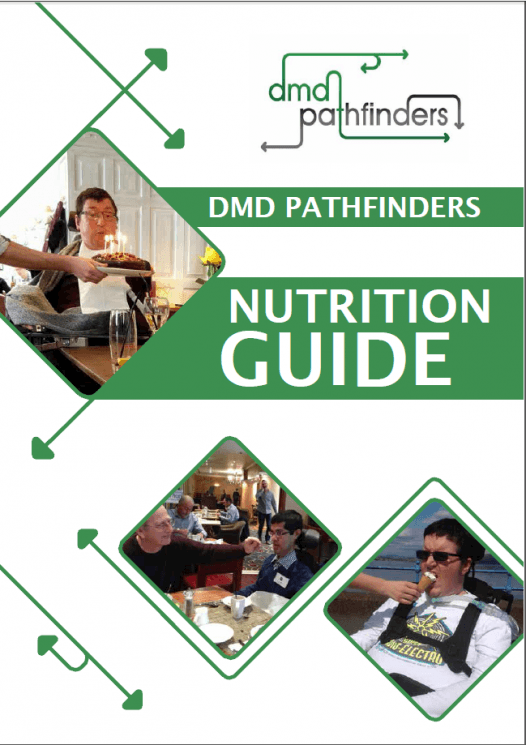
DMD Pathfinders launched a Nutrition Guide for adults with Duchenne. They were working with health professionals around the world to pull together existing best practices and experiences of adults with DMD into a useful resource. Next to this, the Duchenne Care Videos also contain an episode focusing on gastrointestinal and urinary health.
World Duchenne Awareness Day 2019 will be celebrated under the High Patronage of the European Parliament
It is estimated that today in the EU, 5-8000 distinct rare diseases affect 6-8% of the population – between 27 and 36 million people.
The EU’s strategic objective for rare diseases is to improve patient access to diagnosis, information and care. It assists in pooling scarce resources spread across the EU, enabling patients and professionals to share expertise and information. Specific measures include:
CreatingEuropean reference networks linking centers of expertise and professionals in different countries to share knowledge and identify alternative treatment options
As an international Duchenne Communitywe are very grateful to the European Parliament for this important recognition and the effort in fighting rare diseases.
With World Duchenne Awareness Day approaching, there are so many ways you can get involved in raising awareness on this rare muscle condition. No matter what effort you make, your contribution to raising awareness will help lift off Duchenne Muscular Dystrophy from this world. Here are some tips on how you can bring your light for World Duchenne Awareness Day.
Talk. Use this day to bring up topics or questions you have to open up conversation with family, friends or anyone about Duchenne. This can involve this year’s topic ‘Nutrition & Nutriceuticals in DMD’, but can cover anything that is on your mind.
Listen. Some Duchenne parents or families don’t want to hear solutions, they just want to be understood. Allow yourself to become a listener and focus on creating mutual understanding to set the path towards meaningful problem solving.
Learn. Attend a conference, event or fundraiser nearby and support your local Duchenne organisation. This not only brings you fresh knowledge and insights, but also creates a stronger bond with other Duchenne families.
Donate. Reach out to your patient organisation and ask how you can help. Donate your time, expertise or money and help create a better quality of life for those affected by Duchenne Muscular Dystrophy.
Show. Demonstrate your solidarity with the Duchenne community by taking a picture with a red balloon, and post it on social media with the hashtag #WDAD2019, mentioning @duchenneday.
With these steps in mind, we can build together on a future with better standards of care and quality of life by those affected by Duchenne Muscular Dystrophy. On September 7, let’s hear it for Duchenne and Becker boys, men, girls, carriers, and anyone who is affected by this muscle condition.
“If a tree falls in a forest and no one is around to hear it, does it make a sound?”. A large contributor of organising a successful awareness raising effort is great communication. The quality of any relationship (with families, patient organisations, clinicians, institutions and companies) comes down to the quality of good communication. Learning how to communicate effectively goes a long way in creating personal connection and thus, a greater impact of your fundraiser, event or campaign. Here are seven tips to effective awareness communication, regardless of the type of effort.
1. ORGANISE, ORGANISE, ORGANISE
Good project management can make your effort so much less tiring. Create an online document containing a list of participants, programme, list of timings, speakers, and sort out venue & logistics in advance. Assign responsibilities to people who you can build upon. ALWAYS have a backup plan for key pieces of your effort, for example an important speaker or if your event is outside.
2. Ask for testimonials
People don’t just want to hear you talk, they are also interested in hearing other people’s stories. Use the dictaphone function on your mobile or another digital voice recorder to gather experiences, thoughts and insights from participants. If you want to post them on social media, make sure you have consent to use it for those purposes. You can make a list of questions to ask that you can rotate during your interview rounds.
3. Get social
In the days before your event, start making noise in the social arena. Create an event on Facebook, set up a hashtag to collect all things related to your event in one place, and tag or mention influential figures: this may be persons, organisations or institutions. If you organise a conference, you can think of broadcasting or livestreaming the event on Facebook.
4. Engage the press
Journalists are a powerful source to engage and broaden your impact, especially towards the civil society that are not related to Duchenne Muscular Dystrophy. However, they are short on time. Disseminate a press release that contains all the information they need to create an article. A press release contains a strong title, key insights, background, a summary, contact details and high resolution pictures.
5. ensure follow-up
After your event ended, do not stop here. By creating momentum during your event, you can spark engagement with participants and stakeholders to keep going. Are there certain actions that derive from your event? Is a working group starting, or new collaboration efforts? Did new insights and stories emerge from your gathering? This can serve as a basis for new publications.
6. Build a strong team
Create message groups to align your team and ensure everyone is aware of their role. Ask around for volunteers that can take care of tasks like registration, taking pictures, engaging on social media and creating fun activities for children to attend. Don’t be afraid to delegate tasks. Remember the proverb: “If you want to go fast, go alone. If you want to go far, go together.”
7. MAKE IT VISUAL
In the hectic days in advance and during your event, documenting it visually and in text might not be on the top of your list. However, images and notes create the fundamentals of your communication. Hire a photographer, or ask someone to take high quality pictures in landscape on their mobile phones, and collect them in a central cloud storage place like Dropbox or Drive.
Organising an event can be a very stressful job with too many things going on at the same moment, but effective communication with your team and participants can ensure a smooth job. Once you see the gains of good communication and the benefits it brings for your community, your time spent on communication will be more effective and meaningful.
Share the BRING YOUR LIGHT FOR WORLD DUCHENNE AWARENESS DAY video on social media, television, hospital screens, and many other places, and use the press release to make journalists aware of information they didn’t know.
get involved in social media
Communication is essential to raise awareness on Duchenne! Share the promo video, put the red balloon as profile pictures on your social media, tell us in which way you “bring your light” for Duchenne.
Bring your light by donating
Support the activities of the World Duchenne Organization: we can really make the difference together! Use the red balloon, symbol of the World Duchenne Awareness Day.
promote education & set up a meeting
Share the educational materials available on our website, organize an educational meeting or attend a local initiative!
organise an event
Light up a monument to celebrate the World Duchenne Awareness Day, organize an event involving as many people as possible to turn the community bigger and stronger.
In line with the three articles about care considerations for DMD recently published in Lancet Neurology1-3, a new Duchenne Family Guide has been developed and were published on World Duchenne Awareness Day, 2018.
The development of the updated care considerations was funded by the U.S. Center for Disease Control. These updates offer the latest clinical considerations to improve care, services, and quality of life for people living with Duchenne, raise the standards of care for Duchenne and will assist clinicians in making the best possible recommendations for these patients.
A designer, a photographer, a writer and many more ideas came to the mind of the Duchenne boys when, during the fourth edition of the World Duchenne Awareness Day in 2017, it was asked to speak about their dreams. The dreams can become true if they are followed by plans, by commitment by a life that is not limited by Duchenne Muscular Dystrophy. By telling the dreams of the DMD boys worldwide it was possible to inform and involve the civil society to be part of this commitment for a better future.
The third edition of the World Duchenne Awareness day was focused on early diagnosis: identifying and communicating early signs of Duchenne in order to guarantee a good quality of life to the children. Delayed gross motor milestones, Gower’s sign, and delayed speech should raise a red flag and be followed up by a CK blood test as soon as possible. Early diagnosis of Duchenne can allow for timely access to genetic counseling, standards of care, and opportunities for clinical trials. It was asked to many families of different countries of the world to express why Early Diagnosis is so important for the DMD boys.
A designer, a photographer, a writer and many more ideas came to the mind of the Duchenne boys when, during the fourth edition of the World Duchenne Awareness Day in 2017, it was asked to speak about their dreams. The dreams can become true if they are followed by plans, by commitment by a life that is not limited by Duchenne muscular dystrophy. By telling the dreams of the DMD boys worldwide it was possible to inform and involve the civil society to be part of this commitment for a better future.